Wednesday, July 11, 2012

Monday, July 9, 2012
آپ ایک درزی ہیں۔۔۔
سجاد حسین چنگیزی
آخری وقت اشاعت: پير 9 جولائ 2012 , 15:41 GMT 20:41 PST

ہزارہ شیعہ کے ساتھ جو کچھ ہو رہا ہے وہ سب کے سامنے ہے
علی عباس جلالپوری کی کتاب میں ڈاکٹر سگمنڈ فرائیڈ کا ایک لطیفہ ہے ۔ ارے صاحب، یہودی فرائیڈ با لکل کافر ہے اور جنت میں بھی نہیں جائے گا (خیر جنت جانے کا اُس کافر کو چنداں شوق بھی نہیں)۔ جلالپوری صاحب سے بھی آپ کو پرخاش سہی لیکن لطیفہ سننے میں کیا حرج ہے؟
کہتے ہیں کسی زمانے میں، کسی علاقے میں کوئی قبیلہ آباد تھا جن کی وجہ شہرت اُ ن کی عدالت پسندی ، قانون پرستی اور قانون کا بے لچک نفاذ تھا۔ قانون پر عمل درآمد اُن میں اس قدر سختی سے رائج تھا کہ قبیلے کے سردار کی ذات بھی اٰس بےلچک اور بلا مصلحت نفاذ سے مبرا نہیں تھی۔ اب ہوا یہ کہ ایک دن میاں لوہار نے ایک بندہ خدا کا خون کر دیا۔سو اجلاس ہوا، کمیٹی بیٹھی، اور جیسا کہ متوقع تھا، اتفاق ِ رائے سے لوہار کو سزائے موت سنا دی گئی اور لوہار کو پھانسی دینے کے لیے ایک مخصوص دن کا انتخاب کیا گیا۔
اتفا ق دیکھئے کے جن دنوں میاں لوہار جیل کی کو ٹھڑی میں اپنی پھانسی کا انتظار کر رہے تھے، اطلاع موصول ہوئی کہ ایک اور قبیلہ حملے کی تیاری میں مصروف ہے اور عنقریب اِس قبیلے پر دھاوا بول دے گا۔
مزید پتہ چلا کی میاں لوہا ر قبیلے کے واحد لوہار رہ گئے تھے ۔ قبیلے کے سب بڑے بوڑھے ، مُلّا ، قاضی، فوجی سب ہی بڑے پریشان ہوئے ۔ ایک طرف عزّت و عصمت، قانون کی پاسداری کا سوال جو قبیلے کی امتیازی صفت اور وجہ نیک نامی تھی اور دوسری طرف جنگ کے خطرے کے پیش ِ نظر واحد لوہار کی ضرورت، جس نے تلوار ، نیزے ، بھالے اور خنجر ڈھالنے تھے۔ سب شش و پنج میں تھے کہ کیا کیا جائے؟ نظریۂ ضرورت کا سب کو شدّت سے احساس ہوا۔ لیکن قبیلے میں عقلمند لوگوں کی کمی نہ تھی سو دوبارہ مُلّا ، قاضی ، فوجی اور سردار سر جوڑ کر بیٹھے، طویل گفت و شنید ہوئی اور گھنٹوں کے سوچ بچار کے بعد فیصلہ کیا گیا کہ چونکہ قبیلے میں صرف ایک لوہار ہے جبکہ چار درزی ہیں اور پھانسی اور قانون پر عمل در آمد بھی ضروری ہے۔ لہٰذا میاں لوہار کو چھوڑ کر ایک درزی کو پھانسی پر چڑھا دیا گیا۔
جب جب نظریۂ ضرورت کی بات چلتی ہے، جب قانون پرستی، آزاد عدلیہ اور بے لچک انصاف کا چرچا ہونے لگتا ہے، تب تب مجھے یہ لطیفہ یاد آتا ہے۔
جب جب جیلوں سے ’لوہاروں‘ کو کبھی پارلیمنٹ، کبھی کسی ضروری جگہ مذاکرات اور اہم گفت و شنید کے لیے ہیلی کاپٹر میں لے جایا جاتا ہے، نہ جانے کیوں میں الماری کے اندر سے مٹّی تلے دبے جلالپوری صاحب کی اِس کتاب کو جھاڑ پُونچھ کر نکالتا ہوں۔ شاید اس لیے نہیں کہ کافر اور یہودی فرائیڈ کے اس لطیفہ سے کسی ’مومن مسلمان‘ کو کوئی نتیجہ مل سکتا ہے بلکہ ہزارہ شیعہ دوستوں سے میری بات چیت ہوتی رہتی ہے جو آج کل حیرت، وحشت اور مایوسی کے مِلے جُلے احساسات کے ساتھ بار بار پوچھتے ہیں ’آخر ہمارا قصور کیا ہے؟‘
میں صرف انھیں بتانا چاہتا ہوں کہ آپ میاں لوہار نہیں، آپ ایک ’درزی‘ ہیں!
Behind the Buddhas of Bamiyan: the other side of Afghanistan
Isabella Cookson talks to the independent documentary maker, Phil Grabsky.
by Isabella Cookson
Monday 9th July 2012, 09:26 BST
In March 2001 the world stood in shock as the Taliban destroyed the 2,000 year- old Buddhas of Bamiyan. Award winning documentary maker, Phil Grabsky, tells a different story.
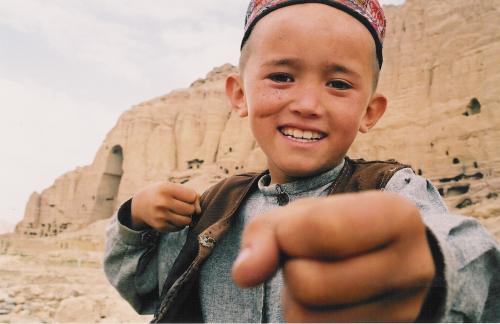
Living in the caves surrounding the Buddhas lives 8-year-old Mir and his family. Grabsky’s unique documentary “The Boy Mir” tracks the life of an ordinary Afghan boy over ten years: there are no patronising voiceovers, no special effects and the family speak straight to the camera.
The project began in 2002, when Grabsky arrived in Afghanistan intent on finding out about the people behind the news coverage that so often focuses on the military attacks. “Mir, in a funny sort of way, found me. He saw me filming on my first day in Bamiyan and lent into the camera. I thought I would be making a film about an adult male but actually in Afghanistan in 2002 the men were exhausted, depressed, broke, without work, without hope and therefore there was no story to drive this along.”
There is certainly a beautiful contrast in the films between the cheeky smile of the young boy and the cynical depression of his relatives who have seen better days.
“His brother’s narrative doesn’t change over the ten years, so the film would not have been as interesting had it followed an older person. Whereas we watch Mir grow from 8-18 and watch him physically change too. He at 17 looks like most 27 year olds, he has aged a lot. If Mir gets to 45 in that culture, he’ll be lucky. There were many adventures to be played out, I had no idea that he would end up working down a mine, ploughing fields and so forth. It was scary and exciting because I didn’t know how the story would work out.”
With his co-director, Shoaib Sharifi, a film-maker and Afghan national, Grabsky committed to going to Afghanistan each year for almost a decade. I wonder what it was like to film and live there during one of the most turbulent times in its history.
by Isabella Cookson
Monday 9th July 2012, 09:26 BST
In March 2001 the world stood in shock as the Taliban destroyed the 2,000 year- old Buddhas of Bamiyan. Award winning documentary maker, Phil Grabsky, tells a different story.
Living in the caves surrounding the Buddhas lives 8-year-old Mir and his family. Grabsky’s unique documentary “The Boy Mir” tracks the life of an ordinary Afghan boy over ten years: there are no patronising voiceovers, no special effects and the family speak straight to the camera.
The project began in 2002, when Grabsky arrived in Afghanistan intent on finding out about the people behind the news coverage that so often focuses on the military attacks. “Mir, in a funny sort of way, found me. He saw me filming on my first day in Bamiyan and lent into the camera. I thought I would be making a film about an adult male but actually in Afghanistan in 2002 the men were exhausted, depressed, broke, without work, without hope and therefore there was no story to drive this along.”
There is certainly a beautiful contrast in the films between the cheeky smile of the young boy and the cynical depression of his relatives who have seen better days.
“His brother’s narrative doesn’t change over the ten years, so the film would not have been as interesting had it followed an older person. Whereas we watch Mir grow from 8-18 and watch him physically change too. He at 17 looks like most 27 year olds, he has aged a lot. If Mir gets to 45 in that culture, he’ll be lucky. There were many adventures to be played out, I had no idea that he would end up working down a mine, ploughing fields and so forth. It was scary and exciting because I didn’t know how the story would work out.”
With his co-director, Shoaib Sharifi, a film-maker and Afghan national, Grabsky committed to going to Afghanistan each year for almost a decade. I wonder what it was like to film and live there during one of the most turbulent times in its history.
The subject of Grabsky's documentary, Mir
“I personally found it scary. In a funny way, it’s not so scary when you are there, it’s scary building up to it. Deciding when it’s safer to go: I have two small children and I am putting myself at risk. I must say, there are journalists who are doing this all the time. As a filmmaker I only have to spend a few weeks of the year in Afghanistan, nothing compared to someone who goes to Libya and stays there for months on end and is actively looking for those hotspots. That said, there is a difference between perceived risk and actual risk. The perceived risk of Afghanistan is very clear: you could be kidnapped, you could be captured by the Taliban and beheaded on film; this is the perceived risk that has some basis of truth. The actual risk is very hard to judge. More people die in Britain from bad driving than from terrorism. So you have to think realistically. Afghanistan is a wonderful country, full of interesting people, great food, they are very hospitable, but there are security issues you must take very seriously.”
Grabsky did experience some very near scrapes with the Taliban, “One time we made the mistake of driving at night back to Kabul in 2003. We ran into a Taliban roadblock and I did not want to be there, my thoughts were immediately back at home with my family. But I mean, Afghans are dealing with this every single day, I was flying immediately back to London and was leaving it all behind.”
In a documentary the question of how “real” the film is is an inevitable one: something that he himself was very self-conscious of. “Everything is a choice: you have to be careful about arguing for the reality of the situation. When I’m there, it’s my choice which direction I am pointing the camera, how I’m behaving off screen is affecting the characters, right down to the editing, the music, and in the case of Mir, the translation. All these things are creative or editorial choices. It boils down to the Grierson definition of documentary films that they are “the creative treatment of actuality”. Before you do anything you have to have a sense of what it is that you’re trying to achieve. Too often documentary filmmakers rely on access: I’ve got access to an aircraft carrier or to a hospital or something. That isn’t enough- what is it that you’re trying to achieve with that access?”
Grabsky describes the film as “the most important film I have made”, referring throughout the interview to our cultural need to probe deeper into issues often casually referred to in the media. “We as a society have now invested $900 billion in the war in Afghanistan. Many people have given life and limb in Afghanistan and for us in a way. How can you not be interested to know who the Afghan people are that this fighting is happening around and for? We unfortunately live in a culture of non-thinking, lots of people drift through life without really thinking about things and aren’t that interested in Afghanistan. Personally, I can’t imagine why you wouldn’t be interested and if you are interested in Afghanistan then you must be interested in the Afghan people.”
The uncertainty surrounding the continued presence of British and American troops in Afghanistan has been a cause of political polemic. The current opinion seems favour withdrawal. “When people say, “Oh we’ve just got to get out of there, why do we care about the Afghan people? We just need to get the troops out.” I think it’s a selfish and naïve position, it’s much more complicated than that. You need to understand the situation before you can come to a decision on it. I watch Question Time, and I watch people talk about Afghanistan and they haven’t a clue.
“We are not persecuted here because we are of a particular religion or sex, we don’t think about it. But in Afghanistan being Shia or Hazara puts you at risk and there is nothing ignoble about us wanting to help Afghans live better lives. Much more importantly, we need to ask what is the best way to help? The answer, in my opinion is less focus on military and more focus on aid, more long term planning and less short term running around mountain ranges.
Phil Grabsky is an independent filmmaker and director of Seventh-art; find our more about his work at http://www.seventh-art.com/about.php.
“I personally found it scary. In a funny way, it’s not so scary when you are there, it’s scary building up to it. Deciding when it’s safer to go: I have two small children and I am putting myself at risk. I must say, there are journalists who are doing this all the time. As a filmmaker I only have to spend a few weeks of the year in Afghanistan, nothing compared to someone who goes to Libya and stays there for months on end and is actively looking for those hotspots. That said, there is a difference between perceived risk and actual risk. The perceived risk of Afghanistan is very clear: you could be kidnapped, you could be captured by the Taliban and beheaded on film; this is the perceived risk that has some basis of truth. The actual risk is very hard to judge. More people die in Britain from bad driving than from terrorism. So you have to think realistically. Afghanistan is a wonderful country, full of interesting people, great food, they are very hospitable, but there are security issues you must take very seriously.”
Grabsky did experience some very near scrapes with the Taliban, “One time we made the mistake of driving at night back to Kabul in 2003. We ran into a Taliban roadblock and I did not want to be there, my thoughts were immediately back at home with my family. But I mean, Afghans are dealing with this every single day, I was flying immediately back to London and was leaving it all behind.”
In a documentary the question of how “real” the film is is an inevitable one: something that he himself was very self-conscious of. “Everything is a choice: you have to be careful about arguing for the reality of the situation. When I’m there, it’s my choice which direction I am pointing the camera, how I’m behaving off screen is affecting the characters, right down to the editing, the music, and in the case of Mir, the translation. All these things are creative or editorial choices. It boils down to the Grierson definition of documentary films that they are “the creative treatment of actuality”. Before you do anything you have to have a sense of what it is that you’re trying to achieve. Too often documentary filmmakers rely on access: I’ve got access to an aircraft carrier or to a hospital or something. That isn’t enough- what is it that you’re trying to achieve with that access?”
Grabsky describes the film as “the most important film I have made”, referring throughout the interview to our cultural need to probe deeper into issues often casually referred to in the media. “We as a society have now invested $900 billion in the war in Afghanistan. Many people have given life and limb in Afghanistan and for us in a way. How can you not be interested to know who the Afghan people are that this fighting is happening around and for? We unfortunately live in a culture of non-thinking, lots of people drift through life without really thinking about things and aren’t that interested in Afghanistan. Personally, I can’t imagine why you wouldn’t be interested and if you are interested in Afghanistan then you must be interested in the Afghan people.”
The uncertainty surrounding the continued presence of British and American troops in Afghanistan has been a cause of political polemic. The current opinion seems favour withdrawal. “When people say, “Oh we’ve just got to get out of there, why do we care about the Afghan people? We just need to get the troops out.” I think it’s a selfish and naïve position, it’s much more complicated than that. You need to understand the situation before you can come to a decision on it. I watch Question Time, and I watch people talk about Afghanistan and they haven’t a clue.
“We are not persecuted here because we are of a particular religion or sex, we don’t think about it. But in Afghanistan being Shia or Hazara puts you at risk and there is nothing ignoble about us wanting to help Afghans live better lives. Much more importantly, we need to ask what is the best way to help? The answer, in my opinion is less focus on military and more focus on aid, more long term planning and less short term running around mountain ranges.
Phil Grabsky is an independent filmmaker and director of Seventh-art; find our more about his work at http://www.seventh-art.com/about.php.
Faiths unite in prayer to mourn asylum-seekers lost at sea
BY:PAIGE TAYLOR
From:The Australian
July 09, 2012 12:00AM
UNITING Church ministers have begun inviting Muslims and their imams into congregations across the country to jointly lament the deaths of asylum-seekers who drowned last month trying to get to Australia.
Yesterday inside Perth's Wesley Uniting Church, the central Perth mission that feeds 400 poor and homeless each day, the Reverend Don Dowling stood with imam Mukahtar Ahmadi Hussein Sadiq to offer prayers for the separated, the lost and the dead from two boat tragedies last month.
"This congregation wishes to express its deep regret at the events of the past few weeks," Mr Dowling said.
Australian authorities suspect a total of about 100 people, many of them Hazaras from Afghanistan, drowned last month trying to get to Christmas Island by boat; 109 people were rescued from a boat that capsized between Indonesia and Christmas Island on June 21, Six days later, 130 asylum-seekers were rescued in another deadly emergency.
The bodies of 28 people have been recovered.
Yesterday, Hazaras from Sheik Mukahtar's mosque in the northern Perth suburb of Nollamara sat in the first four pews of the inner-city church with heads bowed.
Some said later they were refugees who had come by boat as far back as 2000. The imam is a refugee too, although he arrived by plane.
Through an interpreter, Sheik Mukahtar told The Australian he fled political persecution in Afghanistan, heading for Iran where he applied to and was accepted by Australia's Department of Immigration and Citizenship 3 1/2 years ago as part of the nation's annual humanitarian intake.
"Our people have been persecuted in Afghanistan for 300 years, that is why they seek asylum," Sheik Mukahtar told the congregation.
"It is great that we can be here together in this church and learn more about each other -- two holy religions that live side by side in a peaceful and respectful way."
Sheik Mukahtar said the deaths of asylum-seekers at sea always affected his people deeply. Many of the regulars at his mosque were refugees and it did not matter that they knew nobody onboard.
"They felt it, they felt it," he said.
After a reading from the Koran, baritone David Bowyer sang Comfort, Comfort All My People.
Mr Dowling said yesterday's service was the second to remember the dead from last month's boat tragedies. The first was in Adelaide.
From:The Australian
July 09, 2012 12:00AM
UNITING Church ministers have begun inviting Muslims and their imams into congregations across the country to jointly lament the deaths of asylum-seekers who drowned last month trying to get to Australia.
Yesterday inside Perth's Wesley Uniting Church, the central Perth mission that feeds 400 poor and homeless each day, the Reverend Don Dowling stood with imam Mukahtar Ahmadi Hussein Sadiq to offer prayers for the separated, the lost and the dead from two boat tragedies last month.
"This congregation wishes to express its deep regret at the events of the past few weeks," Mr Dowling said.
Australian authorities suspect a total of about 100 people, many of them Hazaras from Afghanistan, drowned last month trying to get to Christmas Island by boat; 109 people were rescued from a boat that capsized between Indonesia and Christmas Island on June 21, Six days later, 130 asylum-seekers were rescued in another deadly emergency.
The bodies of 28 people have been recovered.
Yesterday, Hazaras from Sheik Mukahtar's mosque in the northern Perth suburb of Nollamara sat in the first four pews of the inner-city church with heads bowed.
Some said later they were refugees who had come by boat as far back as 2000. The imam is a refugee too, although he arrived by plane.
Through an interpreter, Sheik Mukahtar told The Australian he fled political persecution in Afghanistan, heading for Iran where he applied to and was accepted by Australia's Department of Immigration and Citizenship 3 1/2 years ago as part of the nation's annual humanitarian intake.
"Our people have been persecuted in Afghanistan for 300 years, that is why they seek asylum," Sheik Mukahtar told the congregation.
"It is great that we can be here together in this church and learn more about each other -- two holy religions that live side by side in a peaceful and respectful way."
Sheik Mukahtar said the deaths of asylum-seekers at sea always affected his people deeply. Many of the regulars at his mosque were refugees and it did not matter that they knew nobody onboard.
"They felt it, they felt it," he said.
After a reading from the Koran, baritone David Bowyer sang Comfort, Comfort All My People.
Mr Dowling said yesterday's service was the second to remember the dead from last month's boat tragedies. The first was in Adelaide.
Killings of pilgrims
Monday, July 09, 2012
From Print Edition
The ruthless killings of Shia Hazara pilgrims coming from Iran is a barbaric act of terrorism. It is another incident of genocidal atrocity against the peaceful Hazara community living in Quetta for a long time. There is no doubt that the government of Balochistan has completely failed in providing security to its peaceful citizens. The Constitution of Pakistan guarantees security of life to all citizens of the country. It is tragic that both the provincial and federal governments are oblivious to its basic responsibilities. The judiciary which takes suo motu notice of cases of individual victimisation has also closed its eyes to this planned genocide of a peaceful community of our country.
It is strange that even civil society has failed to rise to the occasion and is silent on the brutal acts of terrorism against the Hazaras. It is time Pakistanis truly realised their social responsibility for the rooting out terrorism, to make sure that the lives of the citizens were protected. They should begin displaying this responsibility by universally condemning the killings of Hazaras.
From Print Edition
The ruthless killings of Shia Hazara pilgrims coming from Iran is a barbaric act of terrorism. It is another incident of genocidal atrocity against the peaceful Hazara community living in Quetta for a long time. There is no doubt that the government of Balochistan has completely failed in providing security to its peaceful citizens. The Constitution of Pakistan guarantees security of life to all citizens of the country. It is tragic that both the provincial and federal governments are oblivious to its basic responsibilities. The judiciary which takes suo motu notice of cases of individual victimisation has also closed its eyes to this planned genocide of a peaceful community of our country.
It is strange that even civil society has failed to rise to the occasion and is silent on the brutal acts of terrorism against the Hazaras. It is time Pakistanis truly realised their social responsibility for the rooting out terrorism, to make sure that the lives of the citizens were protected. They should begin displaying this responsibility by universally condemning the killings of Hazaras.
A concerned citizen
Quetta
Subscribe to:
Comments (Atom)